Categories
Our blog our blog & news

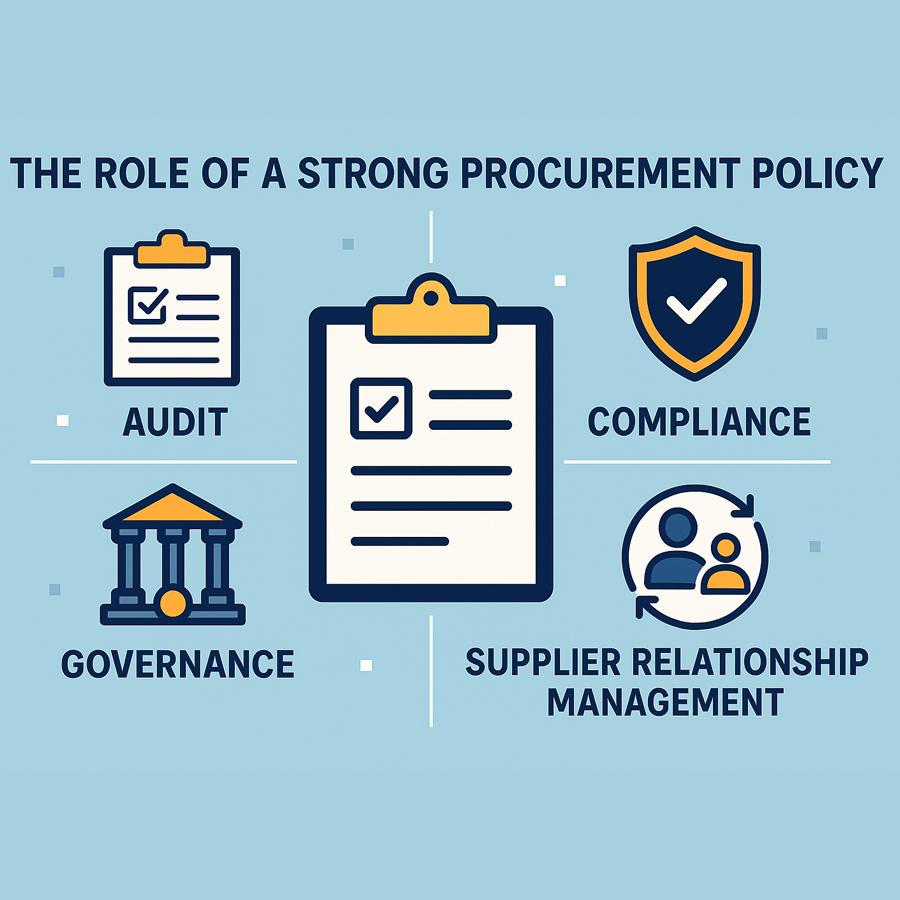
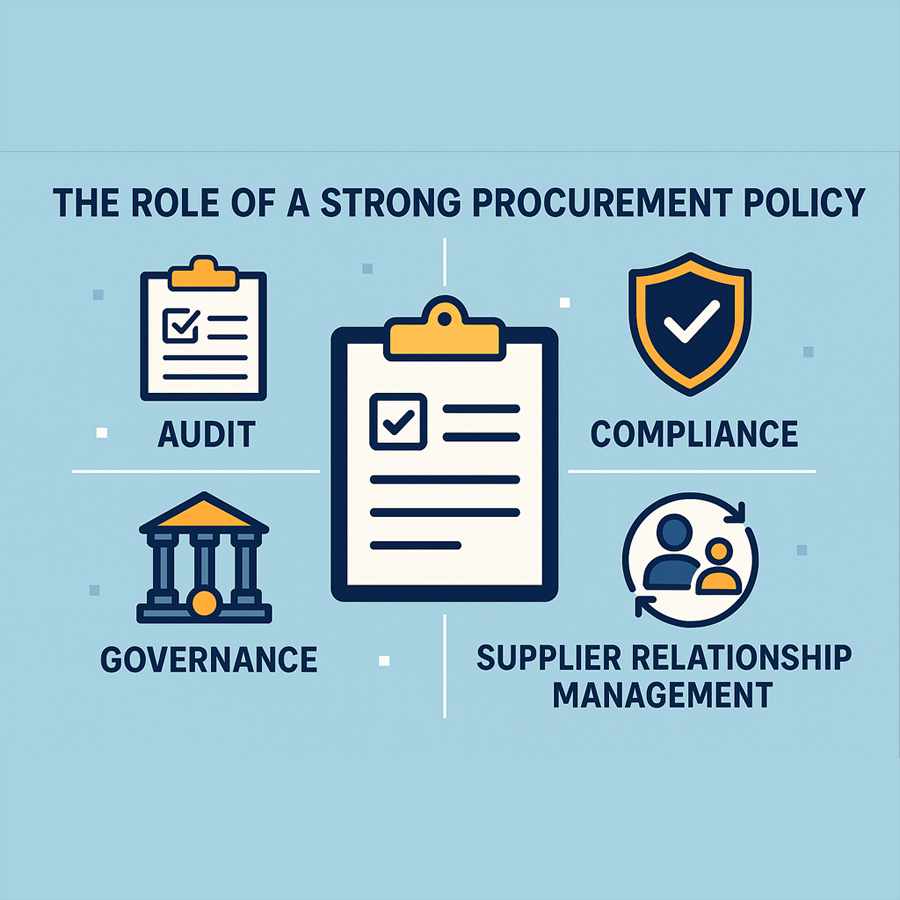
The Role of a Strong Procurement Policy: Emphasizing Audit, Compliance, Governance, and Supplier Relationship Management

our blog & news

By GagnaPro Solutions – Procurement Thought Leadership Series
Introduction

In today’s hyper-competitive service industry, procurement has evolved from a back-office function into a strategic driver of business value. Service-based organizations—ranging from hospitality and healthcare to IT and professional services—rely on a complex network of external providers to deliver critical operations, maintain customer satisfaction, and fuel innovation. As the sector’s reliance on outsourced services deepens, so does the need for robust procurement frameworks that not only optimize costs but also safeguard reputation, ensure regulatory compliance, and build resilience against market disruptions.

A recent industry analysis reveals that robust supply chain risk management can deliver over 70% additional value to a company’s brand in the service sector. Yet, procurement’s strategic contribution is often underestimated, overshadowed by its intangible outcomes and the misconception that its role ends with contract signing. For C-suite executives, the imperative is clear: embedding a strong procurement policy anchored in audit, compliance, governance, and supplier relationship management is essential for future-proofing operations and sustaining competitive advantage.

Audit: Driving Transparency and Continuous Improvement

A procurement audit is not merely a regulatory checkbox; it is a strategic tool for uncovering inefficiencies, mitigating risks, and driving continuous improvement. In the service industry, where intangible deliverables and long-term contracts are the norm, periodic audits provide the transparency and accountability needed to ensure that procurement activities align with organizational objectives.

Key Benefits of Procurement Audits:
  • Compliance Verification: Audits ensure that procurement activities adhere to both internal policies and external regulations, reducing the risk of legal penalties and reputational damage.
  • Process Efficiency: By systematically reviewing procurement workflows, audits identify redundancies, bottlenecks, and opportunities for cost savings.
  • Risk Management: Audits help detect vulnerabilities—such as fraud, policy breaches, or supplier underperformance—that could disrupt service delivery or erode trust.
  • Performance Evaluation: Regular audits provide actionable insights into supplier performance and contract effectiveness, enabling data-driven decision-making.
  • Notably, 89% of organizations have reported experiencing supply chain disruptions in recent years, underscoring the importance of robust audit mechanisms to identify and address emerging risks before they escalate. The adoption of AI-driven procurement management tools is further enhancing audit efficiency, enabling rapid analysis of large datasets and more precise identification of improvement areas.

    Compliance: Safeguarding Integrity and Reputation

    Procurement compliance is the backbone of ethical and effective service delivery. It encompasses the policies, procedures, and controls that ensure procurement activities meet legal, regulatory, and organizational standards. In service-based organizations, where contracts are often customized and supplier performance is variable, strong compliance frameworks are essential for minimizing risk and maintaining stakeholder trust.

    Best Practices for Procurement Compliance:
  • Clear Policy Development: Establishing comprehensive compliance policies and actionable checklists guides procurement officers and vendors in meeting requirements.
  • Ongoing Training: Regular training ensures that procurement teams stay up-to-date with evolving regulations and best practices.
  • Monitoring and Reporting: Implementing compliance tracking tools and regular reporting mechanisms enables early detection of red flags, such as irregular bidding patterns or suspicious vendor behavior.
  • Third-Party Oversight: Leveraging external audits and benchmarking against industry standards strengthens compliance and demonstrates commitment to transparency.
  • The Organisation for Economic Co-operation and Development (OECD) recommends detailed compliance checklists to help organizations identify warning signs, errors, and suspicious behaviors during procurement processes. This proactive approach not only reduces the risk of non-compliance but also enhances the organization’s reputation as a responsible and trustworthy market player.

    Governance: Enabling Strategic Alignment and Accountability

    Procurement governance provides the strategic framework that defines how procurement should operate within the broader context of organizational goals. It encompasses the structures, policies, and oversight mechanisms that ensure procurement activities are consistent, transparent, and aligned with business priorities.

    Core Elements of Procurement Governance:
  • Defined Approval Workflows: Structured approval processes and vendor due diligence ensure that procurement decisions are made transparently and with appropriate oversight.
  • Policy Enforcement: Governance frameworks ensure consistent application of procurement policies across all departments, reducing variability and enhancing control.
  • Stakeholder Trust: Transparent and fair procurement practices build trust with both internal stakeholders and external suppliers, facilitating smoother negotiations and improved performance.
  • Strategic Sourcing: Governance enables procurement teams to focus on long-term value creation by analyzing supplier capabilities, market trends, and alignment with organizational strategy.
  • Audit Readiness: Comprehensive documentation and compliance logs support efficient audit processes, reducing disruptions and enabling rapid response to regulatory inquiries.
  • Strong governance is particularly critical in service industries, where procurement decisions often have direct implications for customer experience, operational continuity, and brand integrity. By embedding governance principles—such as transparency, accountability, and strategic alignment—organizations can ensure that procurement serves as a lever for sustained growth and risk mitigation.

    Supplier Relationship Management: Building Resilience and Innovation
    Supplier relationship management (SRM) is a cornerstone of effective procurement in the service industry. Unlike transactional procurement models prevalent in manufacturing, service-based organizations depend on long-term, collaborative partnerships with suppliers to deliver consistent quality and drive innovation. Strategic Advantages of SRM:
  • Collaboration and Customization: Close relationships with suppliers enable the co-creation of tailored solutions that address unique business needs and enhance service delivery.
  • Risk Mitigation: Proactive SRM allows organizations to assess supplier reliability, monitor performance, and respond swiftly to potential disruptions—protecting both operations and reputation.
  • Innovation Enablement: Engaging suppliers as strategic partners fosters the exchange of ideas and accelerates the adoption of new technologies and processes.
  • Cost Optimization: Strong SRM supports better negotiation outcomes, leverages economies of scale, and drives total cost of ownership reductions without sacrificing quality.
  • Research shows that organizations with mature SRM practices are better positioned to weather market volatility, adapt to changing customer expectations, and capture new growth opportunities. In an era where 83% of international businesses prioritize customer satisfaction, aligning procurement with customer experience goals through effective SRM is a powerful—yet often underutilized—strategy.
  • Conclusion: Strategic Recommendations for C-Suite Leaders

    As service-based organizations face mounting pressures from digital disruption, regulatory scrutiny, and evolving customer demands, the role of procurement has never been more critical. A strong procurement policy—anchored in audit, compliance, governance, and supplier relationship management—serves as a foundation for business resilience, cost efficiency, and reputational strength.

    Strategic Recommendations:

    1. Elevate Procurement to a Strategic Function: Position procurement as a core contributor to business strategy, not merely a transactional or administrative task.
    2. Invest in Technology and Analytics: Leverage AI-driven tools for audits, compliance tracking, and supplier performance management to unlock actionable insights and drive continuous improvement.
    3. Foster a Culture of Compliance and Governance: Embed robust policies and transparent processes across the organization to ensure alignment with legal, ethical, and strategic objectives.
    4. Prioritize Supplier Collaboration: Move beyond transactional relationships to build long-term partnerships that drive innovation, resilience, and customer-centric outcomes.
    5. Regularly Review and Update Procurement Policies: Stay ahead of regulatory changes, market trends, and emerging risks by continuously refining procurement frameworks and practices.

    By embracing these pillars, C-suite executives can transform procurement from a cost center into a strategic enabler—future-proofing their organizations and unlocking sustainable competitive advantage in the dynamic service industry landscape.
    Categories
    Our blog our blog & news

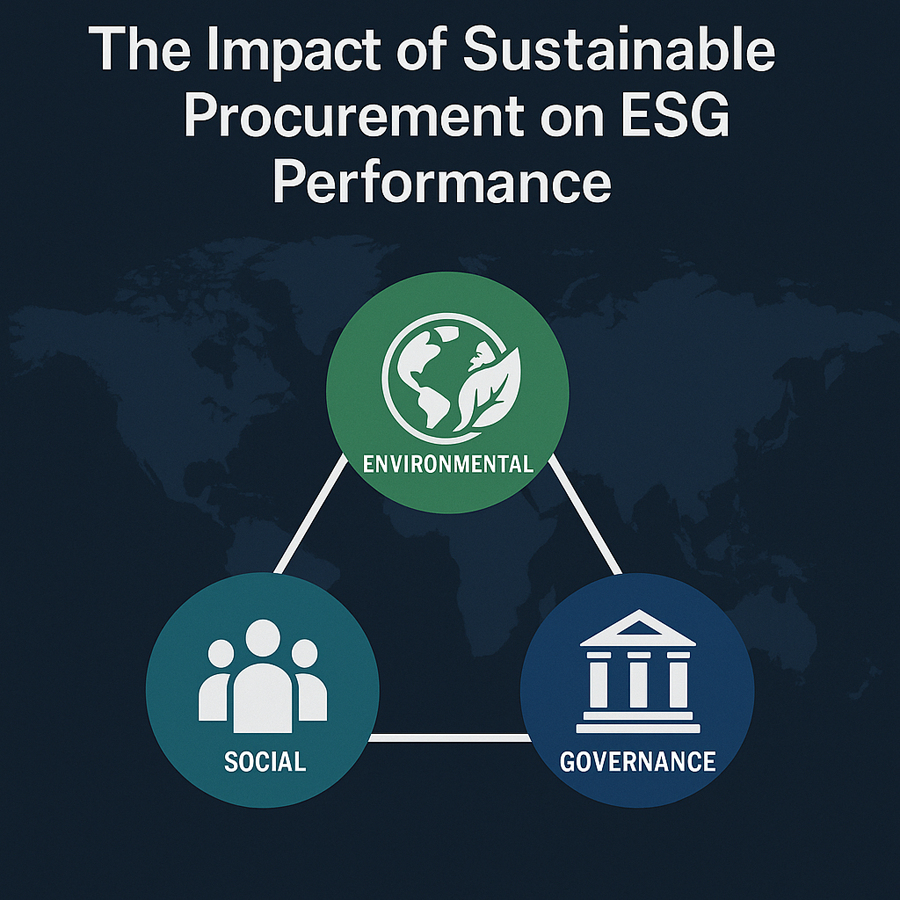
    The Procurement–ESG Nexus: A Deep Dive into Each Pillar

    our blog & news

    By GagnaPro Solutions – Procurement Thought Leadership Series

    1. Environmental Impact: Cutting Carbon, Conserving Resources
    Procurement decisions shape the environmental footprint of businesses in profound ways—from raw material sourcing to transportation modes, packaging choices, and end-of-life product management. Sustainable procurement directly supports the E in ESG by enabling:
    • Carbon Emissions Reduction:
      According to McKinsey, up to 90% of an organization’s greenhouse gas (GHG) emissions originate from Scope 3 sources, primarily suppliers. By integrating carbon metrics into sourcing decisions, organizations can pivot toward low-emission suppliers, incentivize green logistics, and demand eco-friendly packaging.
      Case in point: Unilever achieved a 15% reduction in Scope 3 emissions by embedding carbon disclosure requirements in supplier contracts and prioritizing climate-positive partners.
    • Circular Economy Integration:
      Companies are now favoring suppliers who embrace circular models—repair, reuse, recycle—over traditional linear ones. In the European Union, the Green Public Procurement (GPP) policy requires public tenders to include environmental criteria, accelerating market adoption of circular solutions.
    • Resource Efficiency & Biodiversity Protection:
      Sustainable sourcing of critical inputs—like palm oil, timber, and rare minerals—has become a core mandate. For example, Nestlé committed to sourcing 100% deforestation-free commodities by 2025, reducing biodiversity loss tied to procurement.
    2. Social Responsibility: Ethical Labor, Inclusion, and Community Impact
    • Sustainable procurement is equally crucial in advancing the S in ESG—ensuring ethical treatment of workers, fostering inclusive supply chains, and generating positive community impact. Key dimensions include:

      • Human Rights and Labor Practices:
        In industries such as apparel, agriculture, and electronics, procurement plays a central role in combating child labor, forced labor, and unsafe working conditions. Regulatory frameworks like the UK Modern Slavery Act and Germany’s Supply Chain Due Diligence Act (LkSG) require buyers to assess and report labor practices across their supply base.
        Example: Apple’s Supplier Responsibility Program has conducted over 1,100 supplier audits annually to ensure conformance with human rights and labor standards.
      • Supplier Diversity and Inclusion:
        Leading companies are elevating procurement as a tool for economic equity by prioritizing partnerships with small, local, minority-owned, and women-led businesses. Accenture has pledged to spend US$1 billion annually with diverse suppliers by 2025, driving measurable social impact.
      • Local Economic Empowerment:
        In sectors such as infrastructure and mining, companies increasingly adopt local content requirements—favoring regional vendors to promote job creation and skills development. Sustainable procurement strategies thus directly align with broader socio-economic development goals.
    3. Governance: Transparency, Accountability, and Risk Mitigation

    Procurement functions that champion governance excellence are instrumental in achieving the G in ESG. By embedding ethical controls, digital tools, and third-party verification, organizations build resilient, compliant supply chains. Key practices include:

    • Supplier Due Diligence and Risk Assessment:
      Modern procurement teams conduct ESG-aligned risk assessments before onboarding suppliers—scanning for legal violations, geopolitical exposure, sanctions, and ESG controversies. Tools like the EcoVadis scorecard and Sustainalytics risk ratings are increasingly adopted for informed decisions.
    • Contractual Controls and Audit Mechanisms:
      Embedding sustainability clauses in supplier contracts—such as mandatory ESG reporting, audit rights, and compliance with ethical codes—ensures enforceability. For instance, IKEA’s IWAY code of conduct sets minimum environmental and social standards for all suppliers, with audit compliance tied to contract renewal.
    • Data Transparency and Traceability:
      Technology plays a key role in building transparent supply networks. Blockchain solutions, for example, are being piloted in the food and pharmaceutical sectors to trace origins, prevent counterfeits, and validate sustainability claims.
      Case study: Walmart’s blockchain-enabled traceability initiative now tracks over 25 products from source to shelf, enhancing governance credibility.
    Regulatory and Market Drivers: Why C-Suites Must Act Now

    The convergence of regulatory pressure, investor scrutiny, and consumer activism has made sustainable procurement non-negotiable:

    • Global mandates: The EU Corporate Sustainability Due Diligence Directive (CSDDD), India’s BRSR framework, and the U.S. SEC’s proposed climate disclosure rules will soon mandate sustainability disclosures, extending ESG accountability deep into procurement.
    • Investor expectations: ESG-driven funds account for nearly 40% of global assets under management, and investors are increasingly demanding supply chain transparency as part of fiduciary risk oversight.
    • Reputation and brand equity: Research by Edelman shows that 64% of consumers choose, switch, or boycott brands based on their ESG performance, making procurement decisions a brand-building—or brand-eroding—factor.
    Strategic Recommendations: Embedding Sustainability in Procurement DNA

    To capitalize on the ESG-procurement nexus, C-suite leaders must transition from ad hoc sustainability efforts to enterprise-wide transformation. Here’s how:

    1. Redesign Procurement Policies and Processes Around ESG Goals
      Embed ESG metrics in sourcing scorecards, supplier evaluations, and tender documents. Set targets for low-carbon suppliers, diverse vendor base, and fair labor practices.
    2. Upskill Procurement Teams
      Equip procurement professionals with ESG literacy, category-specific sustainability insights, and the ability to conduct third-party due diligence.
    3. Leverage Digital Platforms for ESG Monitoring
      Deploy tools that aggregate supplier ESG data, flag non-compliance, and enable real-time monitoring of sustainability KPIs.
    4. Foster Collaborative Supplier Relationships
      Move from transactional relationships to partnerships focused on co-developing sustainable solutions—joint investments in renewable energy, green logistics, or ethical sourcing.
    5. Link Procurement KPIs with Corporate ESG Performance
      Align incentives by tying supplier ESG outcomes to performance appraisals and executive scorecards. Elevate Chief Procurement Officers (CPOs) as key stakeholders in ESG governance.
    Conclusion: Procurement as a Catalyst for Sustainable Value Creation

    Sustainable procurement is not simply about meeting regulations or checking ESG boxes. It is a strategic capability that can differentiate brands, fortify resilience, and unlock long-term stakeholder trust. As ESG continues to dominate investor and customer agendas, procurement leaders must take center stage—not just as buyers, but as architects of sustainable growth.

    For C-suite executives, the message is clear: aligning procurement with ESG is not a cost—it’s a value multiplier. Organizations that invest in sustainable sourcing today are not only future-proofing operations but also signaling purpose, accountability, and leadership to the world.


    Categories
    Our blog our blog & news

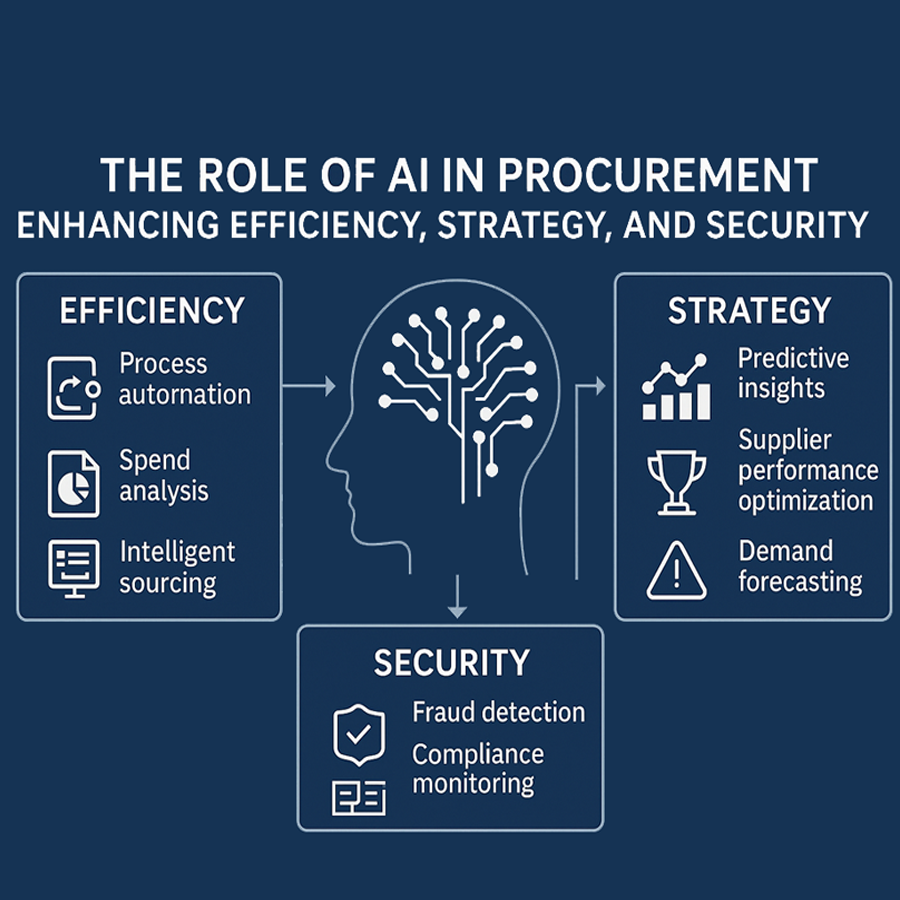
    The Role of AI in Procurement: Enhancing Efficiency, Strategy, and Security

    our blog & news

    By GagnaPro Solutions – Procurement Thought Leadership Series

    Introduction: Procurement’s New Mandate in a Shifting Business Landscape

    In today’s hyper-competitive and volatile global marketplace, procurement is no longer just a cost center—it is a strategic function at the nexus of value creation, risk mitigation, and innovation. But with rising economic uncertainty, supply chain disruptions, ESG demands, and growing regulatory scrutiny, procurement leaders face intensifying pressure to deliver more value with fewer resources. The traditional toolkit—centered around manual processes, fragmented data, and legacy systems—is proving insufficient for this mandate.

    Enter Artificial Intelligence (AI). From predictive analytics to autonomous sourcing, AI is redefining how procurement functions operate, make decisions, and safeguard enterprise value. McKinsey estimates that AI could generate up to $1.1 trillion annually in procurement and supply chain functions globally, primarily through improved efficiency, forecasting, and risk management. As AI capabilities mature—from machine learning (ML) to generative AI and large language models (LLMs)—the opportunity for procurement organizations to lead strategic transformation has never been more compelling.

    This article explores how AI is reshaping procurement along three critical dimensions: efficiency, strategy, and security. It also offers a roadmap for C-suite executives seeking to embed AI capabilities into their procurement DNA for long-term resilience and competitive advantage.

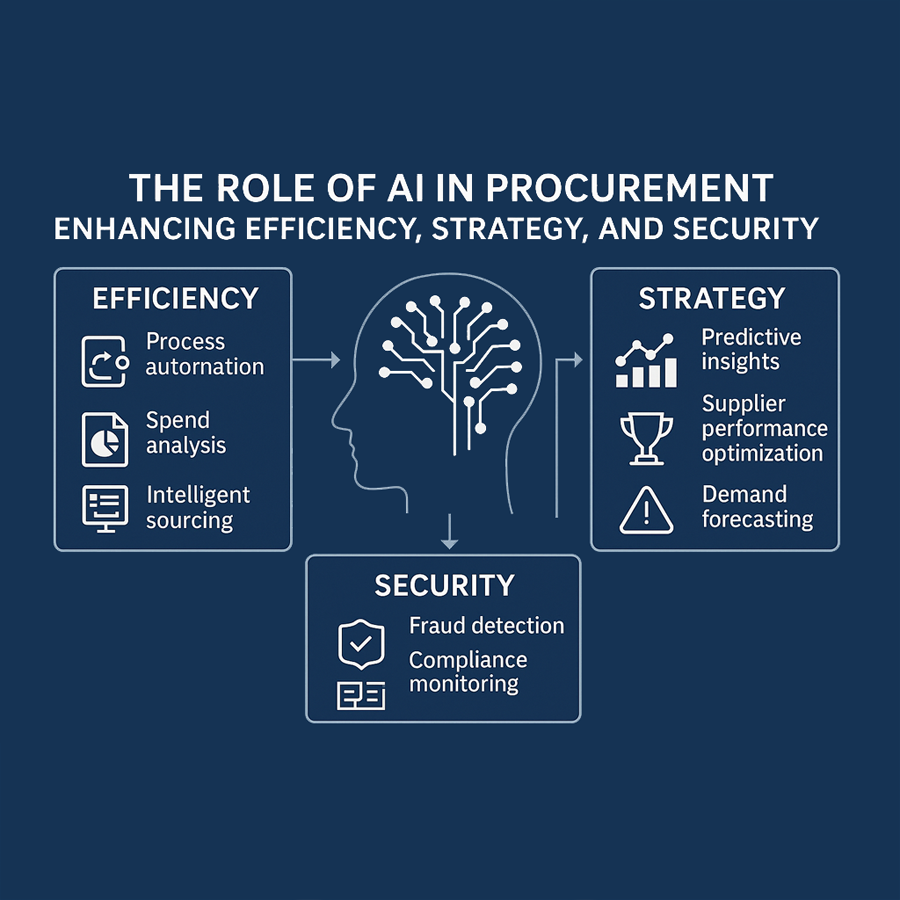
    1. Efficiency: Automating the Engine of Procurement Operations

    Process Automation & Cognitive Procurement
    At the heart of AI’s impact lies its ability to automate time-consuming, repetitive tasks with speed and accuracy. Intelligent bots powered by Robotic Process Automation (RPA) and AI can manage routine procurement activities such as PO creation, invoice matching, contract renewal alerts, and vendor onboarding—freeing up valuable human bandwidth for strategic roles. Deloitte reports that organizations using AI-driven procurement automation have seen up to a 65% reduction in procurement cycle time and a 35% improvement in sourcing productivity.

    Spend Analysis & Tail Spend Optimization
    AI tools analyze vast and unstructured spend data from ERP, P2P, and sourcing systems to uncover savings opportunities, maverick spend, and leakage points. Natural Language Processing (NLP) helps categorize spend across thousands of suppliers and GL codes in real time. Companies such as Unilever and Siemens have leveraged AI-based spend analytics to reduce indirect spend by 8–12% annually.

    Intelligent Sourcing & eAuction Design
    AI platforms like LevaData and Keelvar enable strategic sourcing by recommending optimal supplier mixes, simulating cost scenarios, and designing data-driven eAuctions. These tools adapt based on past sourcing outcomes, market indices, and supplier performance, thus improving sourcing speed and negotiation outcomes. For instance, a global automotive manufacturer reported $120M in savings over three years using AI-powered sourcing bots.

    2. Strategy: Empowering Smarter Procurement Decisions

    Predictive Insights & Demand Forecasting
    AI-driven platforms can integrate historical spend, demand data, external market trends, and supplier behavior to generate predictive forecasts. These insights allow procurement teams to anticipate raw material cost escalations, supplier disruptions, and category-level risks. According to BCG, predictive procurement analytics has helped firms improve forecast accuracy by 30% and reduce inventory holding costs by 20–25%.

    Supplier Performance Optimization
    AI augments Supplier Relationship Management (SRM) by continuously assessing supplier KPIs—delivery timelines, quality metrics, price competitiveness, and ESG compliance—against benchmarks and SLAs. Machine learning models can identify patterns and flag suppliers at risk of underperformance. Some companies now deploy AI-driven SRM dashboards that generate dynamic supplier scorecards, enabling real-time supplier collaboration and escalation protocols.

    Category Strategy Development
    Generative AI is emerging as a powerful tool for strategic category management. It can synthesize competitive intelligence, market pricing trends, contract terms, and supplier innovations to co-develop sourcing playbooks. Platforms like ChatGPT Enterprise and Microsoft Copilot are being integrated with procurement systems to create RFP drafts, contract summaries, and negotiation scripts—cutting down weeks of manual effort.

    3. Security: Reinforcing Governance and Risk Management

    Fraud Detection & Anomaly Tracking
    Procurement fraud costs global businesses over $2.9 trillion annually, according to the Association of Certified Fraud Examiners. AI can proactively flag suspicious activity—duplicate invoices, off-contract purchases, supplier collusion—by identifying anomalies in transaction data. For example, advanced ML models detect fraud patterns across multi-year procurement data with over 90% accuracy, significantly reducing audit lag.

    Compliance Monitoring & Policy Adherence
    AI helps enforce procurement policies by integrating internal guidelines with real-time transaction validation. Contracts can be cross-checked against local regulatory thresholds or ESG norms, reducing non-compliance risk. Some AI tools provide automated alerts when procurement teams bypass preferred suppliers or exceed delegated authority—enabling continuous policy reinforcement.

    Supply Chain Risk Intelligence
    AI platforms now scrape thousands of external data sources—news feeds, regulatory databases, financial filings, social media—to assess third-party risk in real time. From geopolitical tensions to financial insolvency to ESG violations, these tools generate actionable risk heatmaps for procurement leaders. Companies like IBM and DHL deploy AI-based supply chain risk engines to enhance visibility and reduce response times by 50% during disruptions.

    Technology Trends to Watch
    • Generative AI in Procurement Co-pilots: Tools like SAP Joule and Oracle AI Assistants are embedding LLMs into procurement workflows to support contract analysis, negotiation simulations, and intelligent Q&A for buyers.
    • Autonomous Procurement Agents: AI agents can now autonomously execute low-risk purchases, monitor thresholds, and trigger reorders—enabling true touchless procurement.
    • AI-Driven ESG Analytics: Tools like EcoVadis and Resilinc are leveraging AI to assess supplier sustainability scores and track Scope 3 emissions.
    • Integrated AI Suites: End-to-end procurement platforms (e.g., Coupa, Ivalua, GEP SMART) are embedding AI modules for sourcing, contracting, and supplier risk in one ecosystem.
    Executive Recommendations: Embedding AI into Procurement DNA

    To fully unlock AI’s potential in procurement, C-suite executives must act on three strategic fronts:

    1. Invest in Data Foundations: AI is only as powerful as the data that fuels it. Organizations must harmonize procurement data across systems, clean master supplier data, and implement robust taxonomy governance.
    2. Adopt an AI-First Operating Model: Procurement should transition from transactional teams to AI-augmented roles—data translators, supplier intelligence analysts, and category innovation managers. Empowering teams with user-friendly AI tools fosters adoption and innovation.
    3. Pilot, Scale, and Govern: Start with high-ROI use cases—like spend analytics or invoice matching—and gradually scale to strategic areas. Establish an AI governance board to monitor model bias, data security, and regulatory compliance.
    4. Integrate with the Broader Digital Strategy: AI in procurement must align with enterprise-wide digital transformation and ESG agendas. Procurement leaders should co-own digital roadmaps with IT and sustainability teams.
    Conclusion: A New Procurement Paradigm Powered by AI

    As economic pressures mount and supply chain volatility becomes the norm, procurement must evolve from reactive cost management to proactive value creation. AI offers not just automation, but transformation—turning procurement into a predictive, resilient, and intelligent function. By embracing AI across efficiency, strategy, and security dimensions, C-suite leaders can elevate procurement from the back office to the boardroom.

    In the race for competitive advantage, those who embed AI into procurement today will shape the value chains of tomorrow.

    Categories
    Our blog our blog & news

    The Role of Strong Supplier Relationship Management in Strengthening Supply Chain Operations

    our blog & news

    By GagnaPro Solutions – Procurement Thought Leadership Series

    Introduction: Navigating Complexity in a Shifting Global Supply Chain Landscape

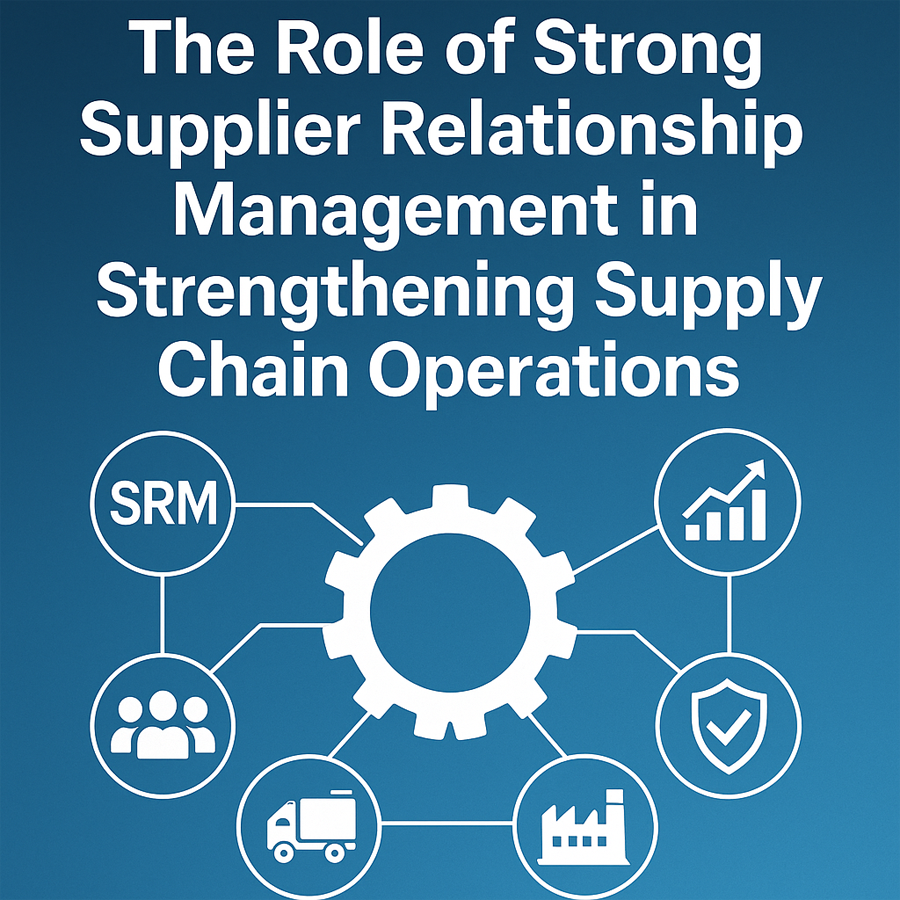
    Today’s global supply chains operate in an era defined by volatility, uncertainty, complexity, and ambiguity (VUCA). The once-linear supply chain has evolved into a dynamic, interconnected ecosystem vulnerable to geopolitical tensions, pandemics, climate-related disruptions, regulatory pressures, and demand fluctuations. In this environment, traditional procurement models focused solely on cost reduction or transactional efficiency fall short. Instead, Supplier Relationship Management (SRM) has emerged as a strategic capability—no longer a “nice-to-have,” but a “must-have” for competitive, resilient, and responsive operations.

    According to a 2023 McKinsey Global Institute report, disruptions lasting a month or longer now occur every 3.7 years, with the potential to erase up to 45% of one year’s EBITDA over a decade in certain industries. The differentiator? Organizations that invested in deeper, collaborative supplier relationships rebounded faster and performed stronger post-disruption.

    This article explores how robust SRM enhances operational performance and builds strategic advantage across industries—and why C-suite executives must embed SRM at the core of their procurement and supply chain strategy.

    How Strong SRM Strengthens Supply Chain Operations

    1. Enhancing Resilience and Business Continuity

    At its core, SRM involves proactive management of a company’s interactions with the organizations that supply goods, services, and capabilities. When implemented as a strategic function, SRM enables companies to:

        • Identify and develop critical suppliers
        • Foster collaborative planning and joint problem-solving
        • Create shared risk management frameworks
        • Maintain visibility into upstream risks beyond Tier 1 suppliers

    A Deloitte survey (2022) found that 74% of organizations with formal SRM programs were better equipped to respond to COVID-19 disruptions, particularly in ensuring continuity of critical supplies.

    Case in point: Toyota, known for its long-term supplier partnerships, was able to recover faster post-earthquake in Japan due to its advanced SRM practices, which included tiered supplier mapping, shared recovery planning, and frequent communication protocols.

    2. Driving Agility and Responsiveness

    In volatile markets, responsiveness is a competitive advantage. Companies with strong supplier relationships can pivot faster to shifts in demand, regulatory changes, or raw material constraints. Agile SRM strategies prioritize:

    • Transparent and real-time information sharing
    • Joint forecasting and demand planning
    • Rapid escalation and resolution protocols
    • Multi-sourcing and nearshoring decisions made collaboratively

    Frameworks such as the Kraljic Matrix and Supplier Segmentation Models (strategic, preferred, transactional) help procurement leaders determine the depth of engagement required for each supplier category, enabling agility without bloating costs.


    3. Unlocking Innovation and Co-Development

    World-class companies treat suppliers not just as vendors but as partners in innovation. Strong SRM fosters early engagement in product design, value engineering, and sustainability solutions.

    For example, Procter & Gamble’s Connect + Develop program formalized co-innovation with suppliers and startups. Over 50% of its innovations now originate from external collaborations. These partnerships reduce R&D costs, accelerate time-to-market, and often yield environmentally sustainable solutions—critical to ESG commitments.

    Key practices include:

    • Joint business reviews and innovation days
    • Collaborative KPIs tied to innovation metrics
    • Open IP frameworks and shared investment models

    4. Improving Cost Efficiency and Value Creation

    While SRM goes beyond cost, it is also a powerful lever for savings through:

    • Total Cost of Ownership (TCO) analysis instead of just purchase price
    • Should-cost modeling and clean-sheet costing
    • Joint process improvement (Lean Six Sigma or Kaizen projects)
    • Volume consolidation across business units for better leverage

    A Capgemini study revealed that companies with mature SRM capabilities achieved 2.5x greater cost savings on average, compared to those with ad-hoc supplier management. SRM also helps identify and eliminate hidden costs stemming from quality issues, delays, or compliance failures.

    5. Strengthening Compliance and Risk Mitigation

    In today’s ESG-driven regulatory climate, compliance is as critical as cost or quality. SRM supports risk management by:

    • Establishing clear governance frameworks
    • Integrating supplier audits and performance reviews
    • Ensuring contract compliance and adherence to ethical standards
    • Monitoring ESG metrics, conflict minerals, and anti-bribery clauses

    Technologies such as third-party risk platforms, blockchain traceability, and AI-driven alert systems now integrate seamlessly with SRM tools to flag early warnings. Companies like Unilever use blockchain to trace palm oil back to its origin, reducing reputational risks and ensuring supply chain integrity.

    6. Leveraging Technology for Scalable SRM

    Digitalization is the cornerstone of modern SRM. Leading platforms—SAP Ariba, Coupa, Ivalua, and Jaggaer—offer integrated solutions for:

    • Supplier onboarding and qualification
    • Performance and risk scoring dashboards
    • Predictive analytics for disruption forecasting
    • Digital collaboration portals for shared KPIs and workflows

    Artificial Intelligence (AI) and Machine Learning (ML) now enhance SRM by offering supplier sentiment analysis, spend pattern recognition, and early warning signals. Natural Language Processing (NLP) is being used to extract risk signals from news, social media, and supplier communication.

    Digital maturity in SRM also enables supplier diversity tracking, CO2 emission monitoring, and real-time compliance status—directly supporting ESG and DEI objectives.

    Conclusion: SRM as a Strategic Differentiator

    As global supply chains evolve from transactional efficiency toward strategic orchestration, the importance of SRM will only intensify. It is no longer sufficient to negotiate favorable contracts and hope for supplier performance. Proactive, data-driven, and collaborative SRM must be institutionalized across the organization.

    Executive Recommendations: Embedding SRM into Core Strategy

    1. Segment Suppliers Strategically: Use the Kraljic Matrix to classify suppliers by risk and value, enabling differentiated engagement models.
    2. Establish Governance: Form SRM steering committees with cross-functional representation—procurement, quality, risk, legal, sustainability.
    3. Invest in Technology: Prioritize SRM platforms with analytics, integration capabilities, and ESG traceability.
    4. Define Shared KPIs: Move beyond internal metrics. Co-create KPIs with suppliers tied to delivery, innovation, compliance, and resilience.
    5. Foster Collaboration: Conduct joint business planning, innovation workshops, and supplier capability-building initiatives.
    6. Measure Maturity: Use SRM maturity models to benchmark progress and identify gaps. Mature organizations should evolve toward supplier ecosystems.

    Long-Term Organizational Benefits

    • 20–30% faster time to recovery from disruptions
    • 10–15% reduction in procurement operating costs
    • Higher supplier satisfaction and innovation contribution
    • Improved ESG scores and reduced reputational risk
    • Elevated customer experience through supply continuity and quality

    As volatility becomes the new normal, strong SRM will be the foundation upon which agile, sustainable, and future-ready supply chains are built. For C-suite leaders, the message is clear: investing in Supplier Relationship Management today secures supply chain competitiveness tomorrow.