
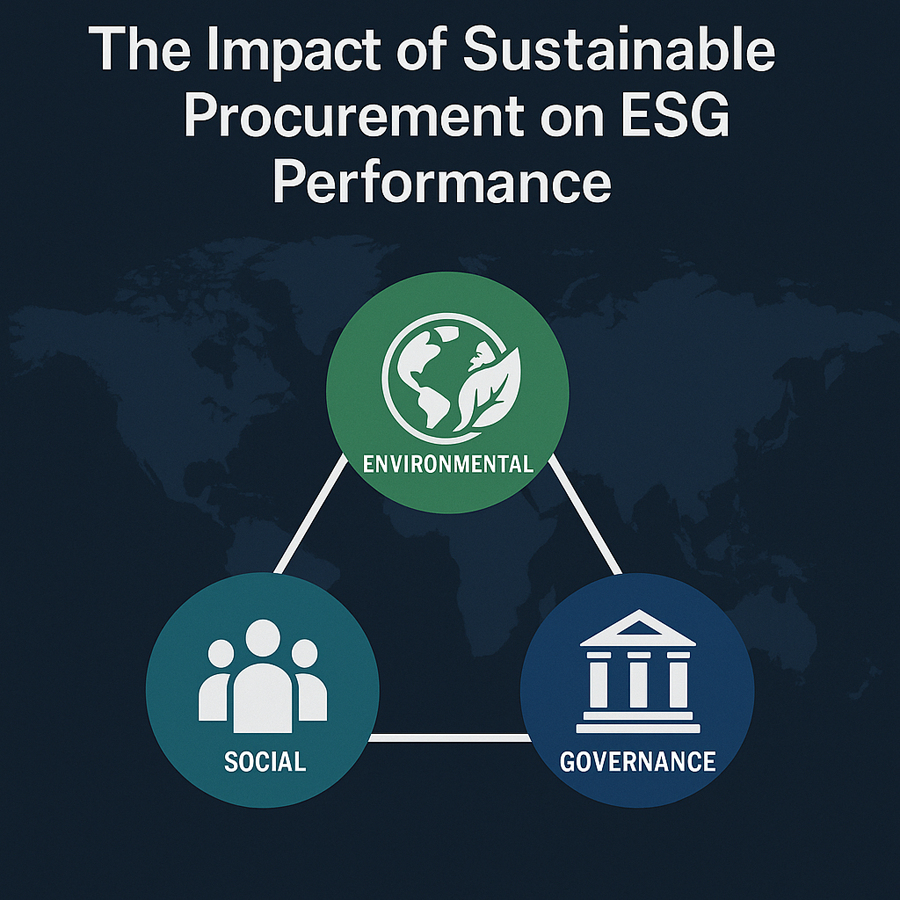
The Procurement–ESG Nexus: A Deep Dive into Each Pillar
By GagnaPro Solutions – Procurement Thought Leadership Series
1. Environmental Impact: Cutting Carbon, Conserving Resources
- Carbon Emissions Reduction:
According to McKinsey, up to 90% of an organization’s greenhouse gas (GHG) emissions originate from Scope 3 sources, primarily suppliers. By integrating carbon metrics into sourcing decisions, organizations can pivot toward low-emission suppliers, incentivize green logistics, and demand eco-friendly packaging.
Case in point: Unilever achieved a 15% reduction in Scope 3 emissions by embedding carbon disclosure requirements in supplier contracts and prioritizing climate-positive partners. - Circular Economy Integration:
Companies are now favoring suppliers who embrace circular models—repair, reuse, recycle—over traditional linear ones. In the European Union, the Green Public Procurement (GPP) policy requires public tenders to include environmental criteria, accelerating market adoption of circular solutions. - Resource Efficiency & Biodiversity Protection:
Sustainable sourcing of critical inputs—like palm oil, timber, and rare minerals—has become a core mandate. For example, Nestlé committed to sourcing 100% deforestation-free commodities by 2025, reducing biodiversity loss tied to procurement.
2. Social Responsibility: Ethical Labor, Inclusion, and Community Impact
Sustainable procurement is equally crucial in advancing the S in ESG—ensuring ethical treatment of workers, fostering inclusive supply chains, and generating positive community impact. Key dimensions include:
- Human Rights and Labor Practices:
In industries such as apparel, agriculture, and electronics, procurement plays a central role in combating child labor, forced labor, and unsafe working conditions. Regulatory frameworks like the UK Modern Slavery Act and Germany’s Supply Chain Due Diligence Act (LkSG) require buyers to assess and report labor practices across their supply base.
Example: Apple’s Supplier Responsibility Program has conducted over 1,100 supplier audits annually to ensure conformance with human rights and labor standards. - Supplier Diversity and Inclusion:
Leading companies are elevating procurement as a tool for economic equity by prioritizing partnerships with small, local, minority-owned, and women-led businesses. Accenture has pledged to spend US$1 billion annually with diverse suppliers by 2025, driving measurable social impact. - Local Economic Empowerment:
In sectors such as infrastructure and mining, companies increasingly adopt local content requirements—favoring regional vendors to promote job creation and skills development. Sustainable procurement strategies thus directly align with broader socio-economic development goals.
- Human Rights and Labor Practices:
3. Governance: Transparency, Accountability, and Risk Mitigation
Procurement functions that champion governance excellence are instrumental in achieving the G in ESG. By embedding ethical controls, digital tools, and third-party verification, organizations build resilient, compliant supply chains. Key practices include:
- Supplier Due Diligence and Risk Assessment:
Modern procurement teams conduct ESG-aligned risk assessments before onboarding suppliers—scanning for legal violations, geopolitical exposure, sanctions, and ESG controversies. Tools like the EcoVadis scorecard and Sustainalytics risk ratings are increasingly adopted for informed decisions. - Contractual Controls and Audit Mechanisms:
Embedding sustainability clauses in supplier contracts—such as mandatory ESG reporting, audit rights, and compliance with ethical codes—ensures enforceability. For instance, IKEA’s IWAY code of conduct sets minimum environmental and social standards for all suppliers, with audit compliance tied to contract renewal. - Data Transparency and Traceability:
Technology plays a key role in building transparent supply networks. Blockchain solutions, for example, are being piloted in the food and pharmaceutical sectors to trace origins, prevent counterfeits, and validate sustainability claims.
Case study: Walmart’s blockchain-enabled traceability initiative now tracks over 25 products from source to shelf, enhancing governance credibility.
Regulatory and Market Drivers: Why C-Suites Must Act Now
The convergence of regulatory pressure, investor scrutiny, and consumer activism has made sustainable procurement non-negotiable:
- Global mandates: The EU Corporate Sustainability Due Diligence Directive (CSDDD), India’s BRSR framework, and the U.S. SEC’s proposed climate disclosure rules will soon mandate sustainability disclosures, extending ESG accountability deep into procurement.
- Investor expectations: ESG-driven funds account for nearly 40% of global assets under management, and investors are increasingly demanding supply chain transparency as part of fiduciary risk oversight.
- Reputation and brand equity: Research by Edelman shows that 64% of consumers choose, switch, or boycott brands based on their ESG performance, making procurement decisions a brand-building—or brand-eroding—factor.
Strategic Recommendations: Embedding Sustainability in Procurement DNA
To capitalize on the ESG-procurement nexus, C-suite leaders must transition from ad hoc sustainability efforts to enterprise-wide transformation. Here’s how:
- Redesign Procurement Policies and Processes Around ESG Goals
Embed ESG metrics in sourcing scorecards, supplier evaluations, and tender documents. Set targets for low-carbon suppliers, diverse vendor base, and fair labor practices. - Upskill Procurement Teams
Equip procurement professionals with ESG literacy, category-specific sustainability insights, and the ability to conduct third-party due diligence. - Leverage Digital Platforms for ESG Monitoring
Deploy tools that aggregate supplier ESG data, flag non-compliance, and enable real-time monitoring of sustainability KPIs. - Foster Collaborative Supplier Relationships
Move from transactional relationships to partnerships focused on co-developing sustainable solutions—joint investments in renewable energy, green logistics, or ethical sourcing. - Link Procurement KPIs with Corporate ESG Performance
Align incentives by tying supplier ESG outcomes to performance appraisals and executive scorecards. Elevate Chief Procurement Officers (CPOs) as key stakeholders in ESG governance.
Conclusion: Procurement as a Catalyst for Sustainable Value Creation
Sustainable procurement is not simply about meeting regulations or checking ESG boxes. It is a strategic capability that can differentiate brands, fortify resilience, and unlock long-term stakeholder trust. As ESG continues to dominate investor and customer agendas, procurement leaders must take center stage—not just as buyers, but as architects of sustainable growth.
For C-suite executives, the message is clear: aligning procurement with ESG is not a cost—it’s a value multiplier. Organizations that invest in sustainable sourcing today are not only future-proofing operations but also signaling purpose, accountability, and leadership to the world.